Wildfires are a Policy Failure

Forests are an incredible creation of nature, a magical blend of species - sustainable, resilient and awe-inspiring beauty. Only humans would have the audacity to harm such a brilliant resource.
The intentional destruction of the boreal forest in Canada has been a sustained effort of governments for decades. The wildfires of 2023 and 2025 are the foreseeable result of policy failures by provincial and territorial governments.
The conversation across legacy and independent media is generally classified into two streams. First, is the expected and predicted assignment of blame to the 21st century’s convenient boogyman, climate change. Easy to fault a concept, one where no accountability is claimed, than to do the hard work on actual contributing factors. Second, are the investigations into challenges to coordinate firefighting, interagency cooperation and championing the call for greater governmental intervention.
After just returning from a vacation in Nova Scotia, where I was the recipient of both the threat of significant fines for wandering in nature, to emergency alerts that left much to be desired, I felt compelled to cancel the weekly diatribe on the state of preparedness, to offer a different take on the causes of wildfires in Canada.
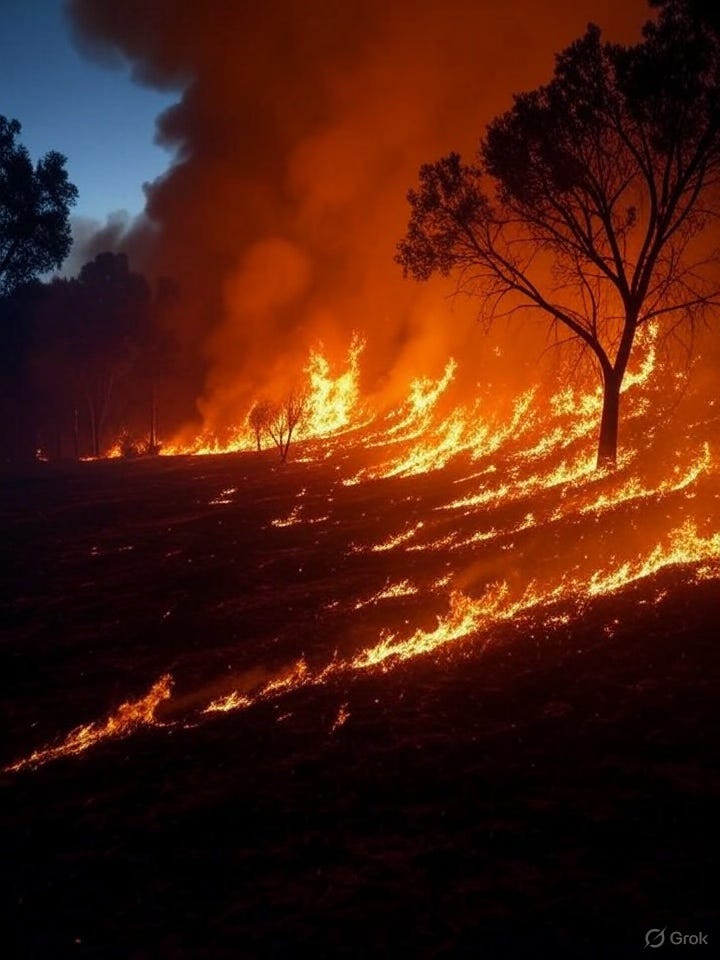
Forest fires are a necessary part of nature, all sections of forests need to burn at some time, none are expected to exist without fire in perpetuity. Pine cones need a fire to seed, nature designed our forests to burn, often regularly, to continue to protect the biodiversity of the landscape. The boreal forest is a mix of trees, some which burn quickly, some slowly, each with a role in managing the health of the forest, to ensure burns occur, clear out deadfall and regenerate the soil.
Over the past century, we’ve created a timber industry that supports a significant population and provides a strong contribution to Canada’s overall GDP. In the past several decades efforts have concentrated on sustainability, the idea that forests are a renewable resource, one that if properly maintained, could contribute indefinitely.
The policy failure in this area was three fold. First, allowing the use of chemicals to hack biodiversity and damage the environment. Second, minimal investment in forest management practices to mitigate future losses due to wildfire and third, nominal building of response capability. I’ll tackle these one at a time.
Glyphosate is a chemical widely used, especially in British Columbia, to kill non-profitable species of timber. The intent is to create conditions for an increased growth rate and population of valuable timber, therefore generating a higher profit per hectare. With over 1 million hectares sprayed in BC alone, the damage to the ecosystem may be permanent. The policy decision to kill off aspen trees has led to conditions that create both an elevated fire risk due to reduction in bio-diversity and increased fire spread. The chemicals create a tinderbox in the name of profit. The human effects of consuming this chemical are well known, it leads to significant environmental harms and remains the subject on many litigation efforts to limit or prevent the use of the chemical in Canada. While Quebec banned the practice in 2001, many provinces support the continued application of harmful chemicals on the forests.
Quebec moved to human managing of forests, embracing long known practices of intervening in nature using methods that protect the forest and the GDP value within. Indigenous peoples across the globe have been using controlled burns for thousands of years to allow for the continued occupation of wildland urban interface (WUI), while mitigating risk. In the modern forestry industry, this is well understood and is further enhanced by the investment in forestry roads, firebreaks and the practice of controlled burns. In Canada, there has been a reduction in prescribed burns, due to a lack of expertise, accreditation, but most significantly, bureaucracy. The pursuit of lower CO2 emissions has led to some restrictions on burns, which ironically leads to a much higher likelihood of CO2 gasses in unmanaged wildfires. A series of municipal and provincial regulations set the framework for a complicated and difficult burn plan, with a host of experts calling for investment in forest management, to protect biodiversity and the environment.
Finally, under the Canadian Constitution, natural resources and the management within are a function of the provinces and territories. It is their responsibility to ensure that they have the necessary resources to combat wildfire, through investments in wildfire firefighters, equipment, aerial capability and the latest technology. While the total hectares burned in Canada has been on a steady decline over the past 30 years, 2023 and 2025 are statistical outliers, but demonstrate the lack of preparation. We have heard many arguments from provinces that they are responsible for natural resources, so should they be accountable for the outcomes. Ontario began new cash injections in 2024, with other provinces continuing to contribute.
If the desired outcome is a sustainable and safe forestry sector, then addressing each of these contributing factors will significantly contribute to less wildfires,
Political debates aside, if a province is clearly overwhelmed and underprepared, the first indication will be a call for federal assistance, likely using language such as “unprecenteted, driest conditions in “X” decades” and other descriptors carefully chosen to seed the doubt as to responsbility. Next, will be the blame on climate change and human activities, reinforcing that the government is handcuffed in their ability to manage, as it remains the result of nefarious actors - the climate and the outdoorsy types. Last comes the clarion call for greater cooperation and a national agency, blaming coordination as a rationale for delayed response or limited asset availability.
These are the predictable cards played by a government who made the policy decision not to invest sufficient resources in wildfire management, got caught unprepared and are scrambling to find someone or something to blame. Hilarious if not sad, especially for the losses that did not have to occur.
When was the last time you heard a premier state that a wildfire situation was the result of their policy decisions, and had they chosen other courses of action these losses likely would not have occurred. Never, predictable really.
The unpopular, but evidence-based reality is that policy decisions to poison the forests, ignore centuries of knowledge and avoid investing in response capabilities set the conditions for 2023 and 2025. These were predictable fire seasons.
This is a policy failure that is 100% within our control to address, the question is whether the leadership exists to do so, or will the efforts to find scapegoats continue?